Solo Camping for Two Safety Tips: Essential Protection Guide
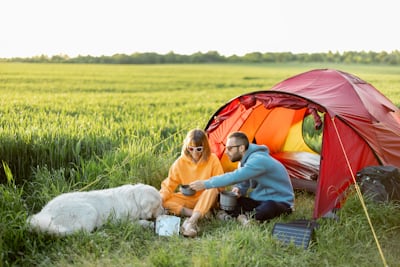
Image source: Unsplash (Free to use)
Solo Camping for Two Safety Tips: Essential Protection Guide
The silence, when it finally settles, is almost a physical presence. It’s not the quiet of a paused city, but a deep, humming void where the only soundtrack is the rustle of leaves and your own breath. That’s the magic of heading into the backcountry, just the two of you. But here’s the thing about that profound solitude—it cuts both ways. The very remoteness that provides peace also means you’re your own first, and often only, line of defense. I learned this not from a manual, but on a trip a few years back in the Sierra Nevada, when a sudden, bone-chilling fog rolled in at dusk, separating my partner and me for one very long thirty minutes near a creek. It was a harmless scare, but it drilled in a simple truth: safety for a duo isn’t about paranoia; it’s the foundation that lets you truly unwind.
Talking Through the “What Ifs” Before You Go
Most of the safety work happens long before you lace up your boots. For a couple, this means a candid conversation that’s less about gear and more about expectations and fears. It’s not the most romantic pre-trip chat, but it’s crucial. Sit down with your trail map (a real, paper one, please) and your hiking partner.
- The Unsexy Essentials: Agree on a turn-back time. Not a vague “if it gets late,” but a hard cutoff, like “if we’re not at the summit lookout by 2 PM, we retreat, no debate.” Decide on emergency signals: two short whistle blasts for “I’m okay but stopped,” three for “I need help.” It sounds basic, but in thick brush or fading light, a whistle carries farther and clearer than a shouted voice ever will.
- The Mental Map: Briefly discuss potential hazards specific to your route. Is there a notorious river crossing? A long stretch without shade? Simply voicing these points syncs your mental preparedness. It’s the difference between one person anxiously eyeing a gathering storm while the other obliviously picks wildflowers, and both of you simultaneously deciding, “Okay, time to seek lower ground.”
Your Shared System: Gear & Communication
Your gear is a shared responsibility. Think of it as a symbiotic system where each piece, and each person, has a role.
The Non-Negotiable Trio: There are three items that should never be consolidated into one pack. First, water purification. One filter or set of tablets fails, and you’re both in trouble. Carry independent means. Second, navigation. One person has the GPS app on their phone; the other should have the physical map and compass and know the basics of using them. Technology can falter; redundancy is your friend. Third, emergency shelter. A single lightweight emergency bivvy or space blanket is fine, but it should be accessible to either person in seconds, not buried at the bottom of someone’s pack.
Communication: More Than Just Talk: How you interact on the trail matters. The “sweep” system works perfectly for two: the faster or more navigationally confident person leads, setting a manageable pace. The other takes the rear, acting as sweep. This isn’t about fitness; it’s a safety check. The sweep’s job is to ensure nothing and no one is left behind, and to call for a pause if needed. Every so often, especially after tricky sections, do a visual check-in. A thumbs-up, a shared swig of water—these tiny rituals maintain your team cohesion.
When the Sun Dips: Night & Wildlife Dynamics
Darkness transforms a familiar landscape. For two people, the night shift requires a subtle shift in mindset.
Setting Up Camp: Choose your site together. Look for flat ground, obviously, but also assess the “feel.” Is it overly exposed to wind? Are there dead branches overhead (“widowmakers,” as old-timers call them)? Once decided, divide tasks efficiently: one pitches the tent and lays out sleeping gear, the other secures the food. And about that food—all scented items (toothpaste, snacks, trash) go into the bear canister or hang bag, and it gets placed at least 100 feet downwind from your tent. It’s a non-negotiable ritual.
The Noises in the Night: You will hear things. It’s part of the deal. The key is not to let jumpy imaginations spiral. Instead of a tense “What was that?”, try a calm, “Hear the rustling at 10 o’clock? Probably a raccoon or deer.” Naming the sound, even hypothetically, demystifies it. Have a headlamp within easy reach of both sleeping bags. If a noise is persistent and concerning, a firm, loud “Hey! Get out of here!” from both of you is usually far more effective than whispering in fear. Most creatures want to avoid you as much as you might want to avoid them.
The Mindset: Looking Out for “Us”
Ultimately, the most critical piece of safety equipment isn’t in your pack; it’s in your partnership. It’s a mindset of mutual vigilance, stripped of ego. It means the more experienced person patiently checking in, and the less experienced person feeling empowered to say, “I’m tired,” or “This doesn’t feel right,” without shame. It’s about noticing if your partner is drinking enough water, or if their steps are getting sluggish.
Safety, in this context, isn’t a list of restrictive rules. It’s the series of small, conscious choices—the shared glance confirming the turn-back time, the ritual of hanging the food bag, the comfort of a pre-arranged whistle signal—that weave a subtle net of security. And within that net, you’re free. Free to fully absorb the vast, silent beauty around you, knowing you’re genuinely looking out for each other. That’s when the real adventure, the quiet, connected kind, truly begins.