Solo Camping for Two in the Desert: Heat, Water and Cold
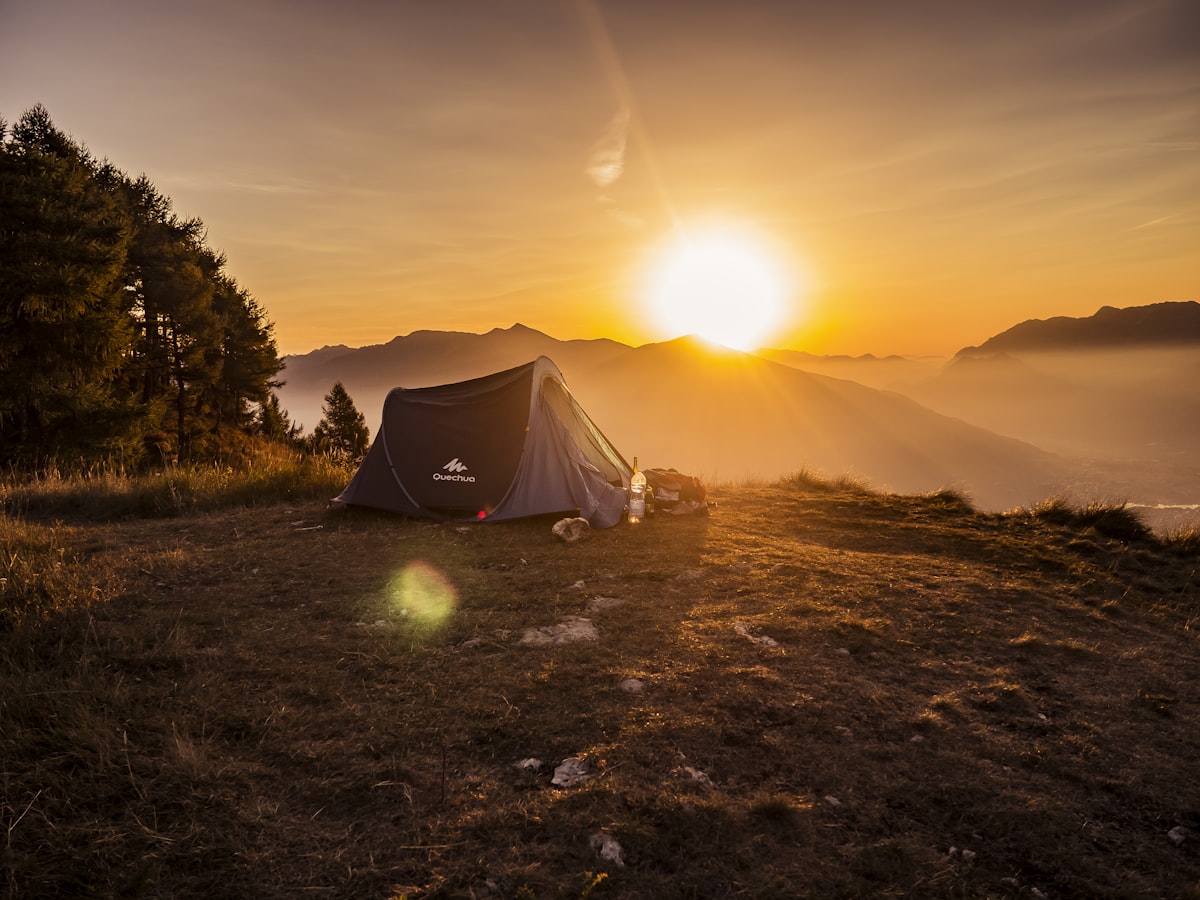
Image source: Unsplash (Free to use)
Solo Camping for Two in the Desert: Heat, Water and Cold
We ran out of water two hours from the car in southern Utah. Not dangerously — we had planned conservatively enough that "out" meant the last few mouthfuls rather than nothing. But the walk back was hot, silent, and educational. We had brought what felt like an absurd amount of water: 4 litres each for a day hike from camp. It was not enough, because the temperature was 8°C higher than forecast and neither of us had accounted for how much a desert takes out of you when there is no shade at all.
The desert is the environment that punishes assumptions carried over from forest camping. It is also, once you respect it, the most extraordinary place to spend a night with another person. The silence is different. The stars are absurd. The temperature swing between afternoon and pre-dawn can exceed 25°C.
This is what two of us learned across a dozen desert trips, camping in the solo style where each person is self-sufficient.
What Makes Desert Camping Different
Four things, and every one of them changes your planning:
There is no water. Not "water is scarce" — often there is genuinely none, for the entire route. You carry everything. This is the single dominant planning constraint.
There is no shade. In forest camping shade is free and everywhere. In desert, shade is a resource you must find, create, or plan your day around.
The temperature swing is enormous. Dry air holds no heat. 38°C at 3 p.m. and 4°C at 5 a.m. in the same 24 hours is entirely normal. People pack for the heat and freeze at night.
Navigation is harder than it looks. Open terrain feels easy to navigate and is not. Slot canyons and washes all look identical, landmarks are distant and featureless, and there is often no trail at all.
Water: Do the Math Properly
This is not the section to skim.
How Much You Actually Need
- Moderate desert conditions, moderate activity: 4–6 litres per person per day
- Hot conditions (over 32°C) with sustained hiking: 6–8 litres per person per day
- Extreme heat: more, and you should not be out there
For two people on a two-night trip in hot conditions, that is potentially 32–48 litres total. Water weighs 1 kg per litre. Do that arithmetic before you commit to a route, because it frequently makes the route impossible without a cache or a vehicle.
The Practical Consequences
- Desert camping is often car camping, and there is no shame in it. Base from the vehicle, day-hike out and back. This is how we do most of our desert trips now.
- Water caches are an option where legal and where you can reliably return to the spot. Bury or shade the cache, mark it precisely with GPS, and label it so nobody removes it as trash. Never rely on a cache as your only water.
- Never trust water sources marked on maps. Desert springs and seeps are seasonal, and map data may be decades old. If a source is critical to your plan, the plan is fragile. Treat every mapped source as a bonus, not a plan.
- Carry more than the two of you calculated. Our rule now is calculated need plus 2 litres each, held in reserve and not touched.
Electrolytes Are Not Optional
In dry heat, sweat evaporates instantly and you do not notice how much you are losing. Drinking large volumes of plain water while sweating heavily can cause hyponatremia — dangerously diluted blood sodium — which presents confusingly like heat exhaustion. Carry electrolyte tablets or powder and use them. One serving per 2 litres in real heat.
Track Consumption Out Loud
With two people it is easy to assume the other person is fine. We now check in explicitly every hour: how much do you have left? It sounds excessive. It is how we avoid repeating that walk back to the car.
Heat Management
Restructure the Day
Do not fight the sun; work around it.
- Hike 5 a.m. to 10 a.m. This is the good part of the day and it is genuinely beautiful.
- Rest 11 a.m. to 4 p.m. In shade, doing as little as possible. This is not laziness; it is the correct tactic.
- Hike again 4 p.m. to sunset.
- Camp chores and dinner after dark, when it is finally pleasant.
The first time we did this properly, our water consumption dropped by roughly a third for the same distance covered.
Creating Shade
There often is none, so bring it. A lightweight tarp pitched high and open — not as rain protection but as a sun shade with airflow underneath — is the highest-value desert item after water. Under a tarp in moving air it can be 10–15°C cooler than in direct sun.
Note that a tent is not shade. A closed tent in desert sun becomes an oven, routinely exceeding 50°C inside. Pitch the inner mesh only, or use the tarp and sleep out.
Clothing
Counterintuitive but correct: cover up completely. Loose, light-coloured, long-sleeved shirt and long trousers, plus a wide-brimmed hat with a neck cape. Bare skin in desert sun loses moisture faster and burns. Sun-protective fabric beats sunscreen for large areas, with sunscreen for hands, face, and neck.
A damp bandana around the neck helps considerably. So does wetting your shirt when water allows — though in a true water-limited situation, drinking beats cooling.
Recognize Heat Illness
With two people you have an advantage: you can watch each other. Learn the signs and check in.
Heat exhaustion: heavy sweating, weakness, nausea, headache, cool clammy skin, fast weak pulse. Stop, get into shade, cool the neck, armpits, and groin, drink with electrolytes, rest properly.
Heat stroke: hot skin that may be dry, confusion, altered behaviour, loss of coordination, possible collapse. This is a life-threatening emergency. Cool aggressively and immediately — water on skin, fan, shade, ice if available — and get help. Do not wait to see if it improves.
The frightening part is that confusion arrives before the person recognizes it. This is precisely why you check on each other rather than trusting self-assessment.
Night Cold: The Overlooked Half
Most people pack for a desert day and get caught by a desert night.
Dry air with no cloud cover radiates heat straight to space. A 38°C afternoon can become a 3°C pre-dawn. At elevation — and much desert is at 1200–2000 m — it can drop below freezing.
Pack accordingly:
- A proper 3-season sleeping bag, comfort-rated near 0°C for spring and autumn desert. Not a summer bag.
- An insulated pad with an R-value around 4. Desert ground gets genuinely cold and sand conducts heat away efficiently.
- A warm layer, hat, and gloves. Yes, in the desert. We have both worn down jackets at 5 a.m. in Utah in May.
- Wind protection. Desert wind at night is common and strips heat fast.
The upside: sleeping out under a desert sky with no tent, in a warm bag, is one of the best experiences in camping. Bring the mesh inner for bugs and leave the fly off.
Terrain and Site Selection
Never Camp in a Wash
This is the rule that kills people. Dry washes and canyon bottoms are flat, sandy, sheltered, and obviously appealing. They are also flood channels.
Flash floods can arrive from a storm you cannot see, tens of kilometres away, with no rain falling where you stand. Water moves fast enough to be unsurvivable and carries debris. Camp on high ground, above the visible high-water line — look for debris caught in vegetation to judge where that is.
Before entering any slot canyon, check the forecast for the entire upstream watershed, not just your location. If there is any chance of rain anywhere upstream, do not enter. This is not caution; slot canyon flooding has killed experienced groups.
Other Site Considerations
- Firm ground over deep sand. Stakes do not hold in loose sand; use rocks, sand stakes, or deadman anchors (a stake or rock buried horizontally).
- Check overhead for loose rock, especially under cliffs and overhangs.
- Avoid the highest exposed point — wind and, in storm season, lightning.
- Look for a natural windbreak — a boulder, a low rise.
- Do not camp on cryptobiotic soil. That dark, crusty, lumpy surface is a living community that takes decades to recover from a single footprint. Camp on rock, sand in washes (during safe weather, above flood level), or established sites. Where you see crust, walk on rock or in sandy washes only.
Wildlife and Plants
Desert wildlife is mostly nocturnal and mostly uninterested in you, but the encounters that matter are worth knowing.
- Scorpions. Shake out boots and clothing every morning. Never put a hand blindly under a rock. Most stings are painful, not dangerous, but reactions vary.
- Rattlesnakes. Active at dawn, dusk, and after dark in hot weather. Use a headlamp when moving at night — always. Watch where you put hands when scrambling. Give any snake a wide berth; almost all bites happen when people approach or try to move them.
- Spiders and centipedes. Same rule: shake out gear, look before reaching.
- Cactus. Cholla in particular detaches and embeds easily. Carry a comb — genuinely, a cheap plastic comb is the standard tool for removing cholla segments — plus fine tweezers for spines.
- Rodents. They will chew through packs for food and for salt. Hang food or use hard containers, and never leave a sweaty pack unattended overnight.
Leave No Trace in the Desert
Desert ecosystems recover on a timescale of decades, not seasons. Impact matters more here than almost anywhere.
- Stay on rock, established trails, or sandy washes. Never walk on cryptobiotic crust.
- Pack out absolutely everything, including human waste in many desert areas. Arid conditions mean waste does not decompose — it mummifies. Many desert parks require a WAG bag or similar. Check the rules and comply.
- No fires in most desert areas, and often illegal. Desert wood is slow-growing, ecologically important, and scarce. Use a stove.
- Do not build cairns or move rocks. Rocks are habitat, and false cairns misdirect other hikers.
- Camp on durable surfaces at least 60 m from any water source — desert water sources are lifelines for wildlife and your presence displaces animals from the only water for kilometres.
A Sensible First Desert Trip for Two
- Go in spring or autumn, not summer. March–May and September–October in most northern hemisphere deserts.
- Car camp for trip one. Base from the vehicle with water in the car. Day hike out and back.
- Check the weather for the whole region, not just your spot, and specifically for upstream rain.
- Bring a tarp for shade. This will change your day more than any other item.
- Calculate water, then add 2 litres each. Track consumption hourly, out loud.
- Restructure the day — early start, long midday rest, evening push.
- Pack a proper sleeping bag and a warm layer despite the daytime heat.
- Camp above the wash, on rock or sand, never on crust.
- Sleep out under the stars if bugs and weather allow. This is the reason to be there.
- Shake out your boots in the morning. Every morning.
Wrapping Up
That walk back to the car taught us more than any successful trip had. Our mistake was not carelessness — we had planned, we had carried what seemed like plenty. It was that we had applied forest-camping intuitions to an environment where they do not hold.
Do the water math honestly and then add margin. Bring shade. Restructure the day around the sun. Pack for a cold night despite a hot afternoon. Never camp in a wash. Stay off the crust.
Get those right and you get the best night sky and the deepest silence available anywhere — shared with one other person who will remember it as clearly as you do.