Solo Camping for Two Campfire Cooking: Real Flame Meals
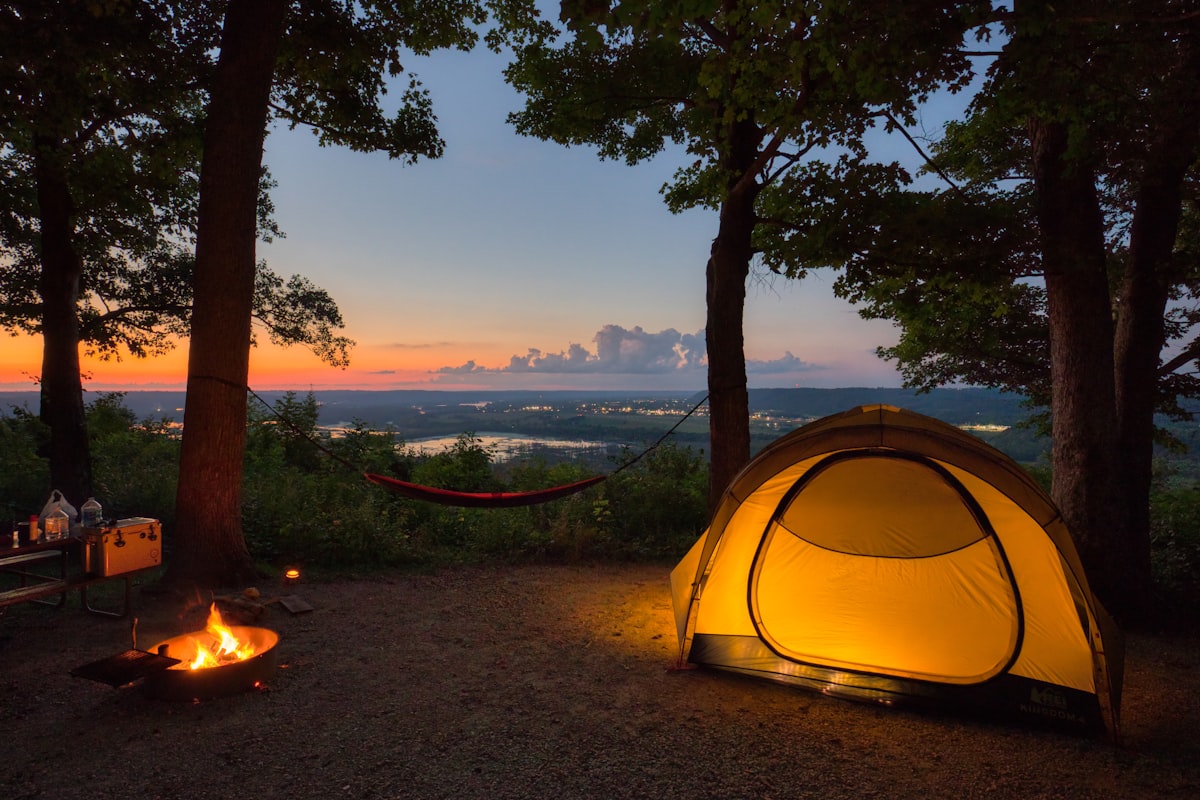
Image source: Unsplash (Free to use)
Solo Camping for Two Campfire Cooking: Real Flame Meals
We burned dinner on our first four camping trips. Not lightly-charred—genuinely inedible, scraped-into-the-fire burned. The problem was not skill with a pan. It was that we kept trying to cook over flames instead of over coals, which is the single most common campfire cooking mistake and the one that took us embarrassingly long to figure out.
Once we understood coals, everything changed. Campfire cooking for two went from a stressful gamble to the best part of the day. This guide is what we learned across roughly sixty campfire dinners, cooking as a duo where both people handle their own gear but share the fire and the meal.
First: Should You Even Cook Over Fire?
Be honest about this before you plan a menu.
Cook over fire when: fire restrictions allow it, there is an established fire ring, you have dry wood available, and you have time. A proper coal bed takes 30–45 minutes to develop. If you arrive at camp at 8 p.m. exhausted, use a stove.
Use a stove instead when: there is any fire ban (check current local restrictions every single time—they change daily in dry season), wood is wet, wind is strong, you are above treeline, or you are in a fragile alpine environment where gathering wood causes real damage.
We carry a small canister stove on every trip regardless. It is our backup and our morning coffee solution. Fire is the plan; the stove is the guarantee.
Building a Cooking Fire (Not a Bonfire)
A cooking fire and a social fire are different things. Most people build the second and then try to cook on it.
The Fire You Actually Want
Small, contained, and burned down. You want a bed of glowing orange coals roughly 5–8 cm deep, with a few small flames at the edge for boiling water. A roaring fire is for after dinner.
The Two-Zone Method
This is how we cook for two people with different foods:
- Build your fire on one side of the ring, letting it burn hard for 30–40 minutes.
- Rake coals to the other side with a stick or small shovel, creating a flat cooking bed.
- Keep feeding the fire on the original side to generate replacement coals.
- Cook over the raked coals. You now have a high-heat zone (near the fire) and a low-heat zone (edge of the coal bed) — exactly like a two-burner stove.
This is the setup that finally let us cook two different things at once without one of them burning.
Wood Selection
- Hardwoods (oak, maple, ash, hickory) burn slowly and produce long-lasting coals. Ideal.
- Softwoods (pine, fir, spruce) light easily, burn fast, and spit resin. Fine for starting, poor for coals.
- Wrist-thick pieces produce coals faster than logs. Split anything thicker.
- Never bring firewood from home across regions—it transports invasive insects. Buy local or gather on site where permitted.
- Dead and down only. Never cut living trees. Follow the local rules on gathering.
Reading Coal Temperature
Hold your palm about 12 cm above the coals and count:
- Can't hold 2 seconds: very hot, for searing only
- 3–4 seconds: hot, good for most cooking
- 5–7 seconds: medium, ideal for foil packets and simmering
- 8+ seconds: low, good for warming or slow-cooking
We use this constantly. It sounds imprecise; it is remarkably reliable.
Gear for Two: What Earns Its Weight
We each carry our own eating kit and split the cooking hardware.
The Short List
- One cast iron skillet, 25 cm (10 inch). Heavy—about 2 kg—and worth every gram if you are car camping or hiking a short distance. Nothing else handles direct coal heat as well. For long approaches, swap for hard-anodized aluminum.
- One pot with a lid, 1.5–2 L. Pasta, rice, soup, boiling water. Get one with a bail handle so it can hang.
- Heavy-duty aluminum foil. The most versatile cooking tool in camp. Bring more than you think.
- A folding grill grate if the site does not have one. Turns any fire ring into a cooking surface.
- Long-handled tongs and a metal spatula. Short utensils mean burned knuckles.
- Heat-proof gloves or a thick leather glove. Cast iron handles reach 200°C+. We use welding gloves; cheap and bombproof.
- Two metal plates, two mugs, two sets of utensils. Stainless or titanium. Skip plastic—it melts near fires, guaranteed.
- A small cutting board (a thin flexible mat works) and one sharp knife.
What We Stopped Bringing
Pie irons (single-purpose, heavy), Dutch ovens (glorious but 5 kg), elaborate spice kits (we now carry salt, pepper, garlic powder, and one hot sauce in a small bottle), and nested cookware sets where we only ever used two pieces.
Eight Two-Person Meals That Actually Work
These are trip-tested, scaled for two hungry adults, and forgiving of temperature mistakes.
1. Foil Packet Sausage and Vegetables
The most reliable campfire meal in existence. Slice sausage, potatoes, onion, and bell pepper. Divide onto two large foil sheets. Add a spoonful of oil, salt, pepper, garlic powder. Fold into sealed packets with a little air space. Place on medium coals 20–25 minutes, flipping once at the halfway point. Nearly impossible to ruin because the foil steams the contents.
2. Skillet Breakfast Hash
Cast iron over medium coals. Pre-diced potatoes (parboil at home to save 15 minutes) fried until crisp, then push to the cool side. Add eggs and cheese on the hot side. Serve straight from the pan with tortillas. This is our standard second-morning breakfast.
3. One-Pot Campfire Pasta
Boil pasta in the pot, drain most of the water (keep a few spoonfuls), stir in a jar of sauce plus a tin of tuna or pre-cooked chicken. Ten minutes, one pot, one wash. The meal we make when we are too tired to think.
4. Coal-Roasted Sweet Potatoes
Wrap whole sweet potatoes in two layers of foil, bury directly in hot coals for 40–50 minutes. They come out caramelized and sweet. Split, add butter and salt. Start these first, before you cook anything else, and they will be ready when the rest is done.
5. Campfire Quesadillas
Dry cast iron over medium coals. Tortilla, cheese, whatever leftovers exist, second tortilla. Two minutes per side. Uses up remnants and requires zero planning.
6. Fire-Grilled Chicken Thighs
Thighs, not breasts—the extra fat means they survive uneven heat. Salt heavily, cook skin-side down on a grate over hot coals for 6–8 minutes, flip, another 8–10. Check that juices run clear and the interior reaches 74°C. Marinate at home in a sealed bag to save camp effort.
7. Bannock Bread on a Stick
Mix 2 cups flour, 1 tablespoon baking powder, 1 teaspoon salt at home in a zip bag. At camp, add water until it forms a stiff dough. Wrap a snake of dough around a peeled green stick and rotate slowly over coals, not flames, for 10–15 minutes. Tastes far better than it should and makes the whole camp smell like a bakery.
8. Skillet Brownie for Two
Boxed brownie mix (measured into a bag at home), water and oil added at camp, poured into a lightly oiled cast iron skillet, covered with foil, set on low coals for 20–25 minutes. Eaten straight from the pan with two spoons. This is the meal that ends good trips.
Cooking as Two Independent Campers
The dynamic matters as much as the technique. What works for us:
- One person owns the fire, the other owns the food. Splitting attention between both is how dinner burns. We rotate roles by night.
- Prep before you light. Everything chopped, portioned, and within reach before the coals are ready. Fire moves on its own schedule and will not wait for you to dice an onion.
- Agree on dinner before you leave home. Deciding what to eat while hungry, in the dark, next to a dying fire, is how trips get tense.
- Whoever cooks does not wash. Simple rule, zero arguments, applied every meal.
- Each person carries their own emergency food. Two bars and a packet of instant noodles each. If the fire fails or the weather turns, nobody goes hungry and nobody is dependent on the other person's pack.
Cleanup, Food Safety, and Fire Safety
Washing Up
Scrape food scraps into a bag to pack out—never into the fire (it does not fully burn and attracts animals) and never into a stream. Wash with a small amount of biodegradable soap in a pot, then strain and scatter the greywater at least 60 metres from any water source. Cast iron gets scraped, wiped, and re-oiled lightly; never soaked.
Food Storage
This is a safety issue, not a convenience one. All food, trash, toiletries, and anything scented goes into a bear canister or a properly hung bag, at least 60 metres from where you sleep and 4 metres off the ground. In bear country this is mandatory. Everywhere else, raccoons and rodents will still find you.
Putting the Fire Out Properly
Water, stir, water again, stir again, until the ashes are cool enough to touch with a bare hand. Not "mostly out." Cool to the touch. A fire left smoldering can reignite hours later in wind. This is the single highest-consequence mistake in campfire cooking, and it is entirely preventable.
Wrapping Up
Campfire cooking for two is a skill with a steep beginning and a long, satisfying plateau. The techniques that matter are few: build small, wait for coals, use two heat zones, and prep before you light. Everything else is variation.
Our best camp meal was not complicated. It was foil packets of sausage and potatoes on a cold October evening, eaten with numb fingers next to a lake, after a day of hiking that went longer than planned. It took twenty-five minutes and four ingredients. What made it memorable was the fire, the quiet, and the person across from it.
Learn coals first. The rest follows.