Solo Camping for Two Trip Planning: Roles, Routes and Rules
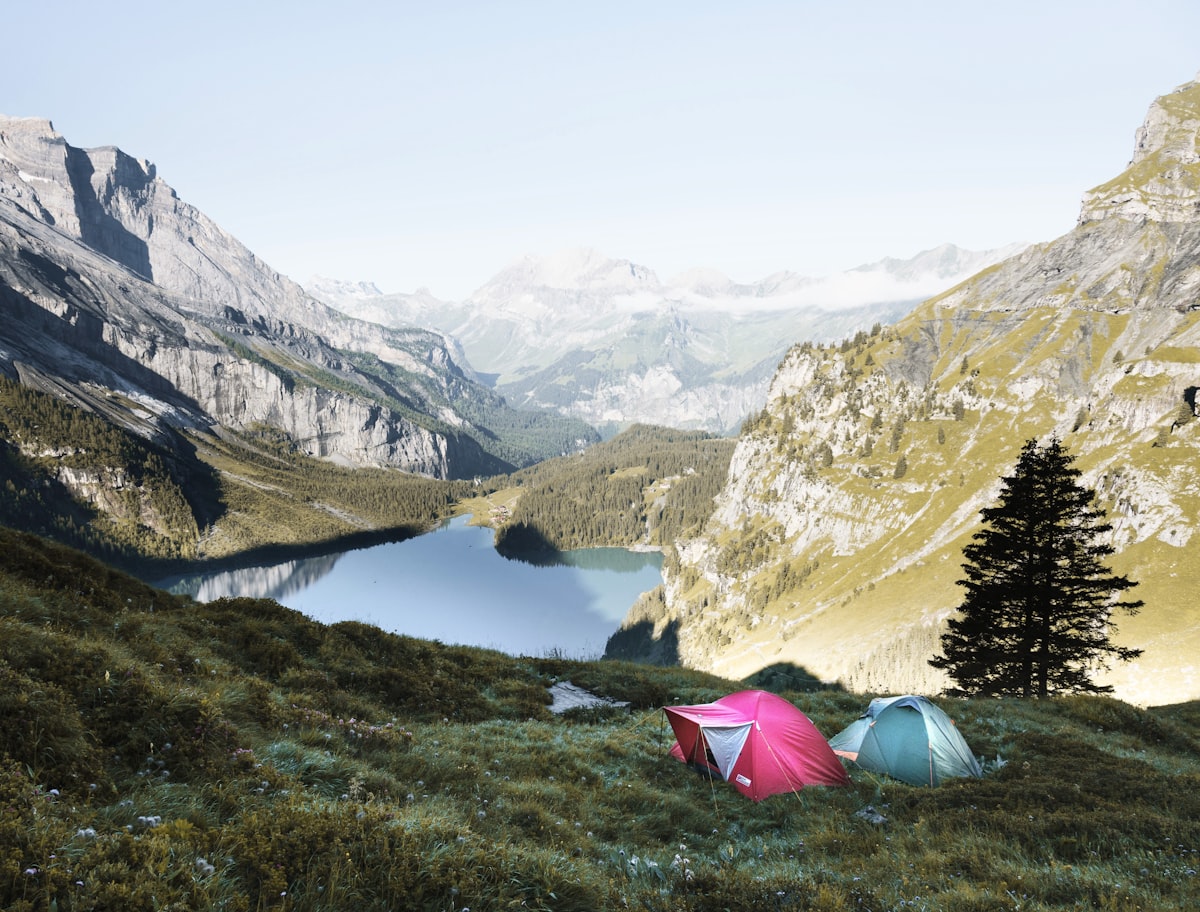
Image source: Unsplash (Free to use)
Solo Camping for Two Trip Planning: Roles, Routes and Rules
The worst trip I have ever been on was, on paper, perfectly planned. Good route, good weather window, decent gear, two reasonably fit people. What we had not planned was anything about how we would operate together. By the second afternoon we were barely speaking — not because either of us had done anything wrong, but because I wanted to push to the far lake and my friend wanted to stop at the near one, and we had never established who decides that or how.
We got home, talked it through, and built a planning process. Eleven trips later we have not had a single serious disagreement in the field. The process is not complicated, but almost none of it is about gear.
If you camp as a duo in the solo style — each person self-sufficient, each carrying their own shelter and sleep system — the logistics are actually easier than a fully shared setup. What gets harder is decision-making. That is what this guide is about.
Start With the Trip Type Conversation
Before route, before dates, before gear: agree on what kind of trip this is. Most duo friction comes from two people quietly planning different trips.
Ask each other directly:
- Is this a rest trip or a challenge trip? These are incompatible. A rest trip has low mileage, early camp, long evenings. A challenge trip has big days and arrives at dusk. Pick one.
- What is the actual goal? A summit? A specific lake? Miles covered? Photography? Doing nothing by water? Name it out loud.
- How much do you each want to talk? This is a real question and asking it prevents genuine resentment. One of us wants conversation over dinner and silence while walking. Knowing that in advance is worth more than any gear tip.
- What is your comfort budget? Some people will trade 2 kg for a chair and a real pillow. Some will not. Neither is wrong. Say it early.
- What is the hard return time, and who has an obligation on the other side?
We now do this over a 20-minute call before anything else. It has killed maybe three trips at the idea stage, which was the correct outcome each time.
Splitting Gear Without Losing Independence
The solo-style approach means redundancy where it matters and sharing only where duplication is genuinely pointless.
Each Person Carries Their Own
- Shelter (tent or hammock and tarp)
- Sleep system — pad, bag or quilt, pillow
- Full clothing set including one untouched dry layer
- Headlamp plus spare batteries
- Water bottles and their own filter or purification method
- A basic first aid kit
- Navigation — map, compass, and their own phone with offline maps downloaded
- Emergency food for one extra day
- Fire starter
That list looks wasteful. It is not. The point is that either person can complete the trip or self-rescue if the other's gear fails or if you get separated. A single shared filter that clogs is a trip-ender for two people. Two filters is a minor annoyance.
Genuinely Worth Sharing
- Cooking hardware. One stove, one pot, one skillet. Duplicating this is pointless weight.
- The repair kit. One good kit beats two mediocre ones.
- Bear canister or hang system, if capacity allows.
- A single larger first aid kit for the serious items — trauma dressings, splint material, medications — supplementing each person's small personal kit.
- Water treatment backup. Purification tablets as a shared fallback behind two filters.
The Split Conversation
Weigh the shared items and divide by total mass, not by item count. Then check: is one person carrying 4 kg more than the other? If so, is that proportionate to body weight and fitness, or is it just how the items happened to fall? We rebalance in the car park before every trip. Takes five minutes, prevents a lot of quiet resentment on day two.
Assigning Roles Explicitly
This is the part that fixed our trips. Vague shared responsibility means things get done twice or not at all.
We assign four roles per trip and swap them between trips:
Navigator. Owns the route. Carries the primary map, tracks position, calls the turns. The other person still carries a map and still pays attention — but one person is responsible. Two people casually half-navigating is how you miss junctions.
Camp lead. Picks the site, decides where shelters go, manages water collection and food storage. Site selection by committee at dusk while tired is genuinely awful.
Cook. Owns dinner from planning through washing up, with the standing rule that whoever cooks does not wash. Both people know the menu in advance.
Safety lead. Carries the shared first aid kit, holds the emergency plan, knows the bail-out routes and the nearest trailhead, and has the authority to call a stop.
Swapping roles between trips matters. It stops one person becoming the permanent navigator and the other permanently deskilled — which is a real problem if the navigator turns an ankle.
Route Planning for Two Different People
Plan to the Slower Person, Honestly
Total group pace is the slower person's pace, minus a bit, because they will be pushing. Pretending otherwise produces a resentful fast person and an exhausted slow person.
Use a real estimate: 1 hour per 5 km plus 1 hour per 600 m of ascent, then add 30–50% for rough terrain, heavy packs, or bad weather. Two people also stop more often than one — for photos, for layers, for snacks. Add 20% for that.
Build in Decision Points
Rather than one fixed route, plan a route with branches:
- Point A (2 hours in): if both feel good, continue to the high route. If not, take the valley.
- Point B (near camp): if you arrive before 4 p.m., push to the far lake. After 4 p.m., camp at the near one.
The decision is made by the clock and by how you feel, not by argument. This is the single change that eliminated our conflict — we were not disagreeing about values, we just had no mechanism.
Identify Bail-Outs Together
Both people should know, at any point on the route, the fastest way to a road. Not just the safety lead. Mark them on both maps. If you separate — which you should avoid, but which happens — you both need to know where to go.
Agree on What Happens If You Separate
Have this conversation before you need it. Ours is simple: whoever notices first stops and waits 15 minutes, then backtracks to the last known common point and waits there. Nobody continues forward. We also set a daily meeting point if we plan any solo side-trips.
The Rules Worth Setting in Advance
These sound overly formal. They take ten minutes to agree and remove almost all in-field friction.
- Either person can call a stop, no justification required, no negotiation. This is the most important rule on the list. It means nobody pushes through a bad feeling to avoid seeming weak — which is exactly how injuries and hypothermia happen.
- Turnaround conditions in writing. "If wind exceeds X, we camp low." "If it is still raining at 9 a.m., we walk out." Decided warm and dry at home, not cold and tired at 3 p.m.
- Whoever cooks does not wash.
- Camp built before dark, every night, non-negotiable.
- No white lights after full dark without announcing it — relevant if either of you cares about night vision.
- Personal quiet time is allowed and normal. One person reading alone for an hour is not a problem to be solved.
- Debrief on the drive home. What worked, what did not, one thing to change. This is how the process improves.
Logistics Checklist
Two to Three Weeks Out
- Trip type conversation, agree on goal and dates
- Confirm the area's rules: permits, fire restrictions, dog rules, quota systems, seasonal closures
- Book permits if required — popular areas book out months ahead
- Both people study the same map, independently, then compare notes
- Assign the four roles
- Agree on the menu
One Week Out
- Divide shared gear, weigh, rebalance
- Both check personal gear: any repairs, any missing items
- Confirm the trip plan in writing, sent to one person staying home — route, campsites, vehicle and plate, exit time, when to call for help
- Both download offline maps
- Test anything new. A stove you have not lit or a filter you have not used is a liability.
Day Before
- Final forecast check, including wind and freezing level, not just rain probability
- Confirm turnaround conditions
- Both charge everything; both pack a power bank
- Agree on departure time and who drives
At the Trailhead
- Rebalance packs if needed
- Confirm today's route and the first decision point
- Confirm who is navigating today
- Send a final message: leaving now, expected out at X
What Goes Wrong and How to Handle It
Mismatched fitness. Do not pretend it away. The stronger person carries more weight and sets a pace they find easy. If the gap is large, pick a shorter route rather than a shared misery.
One person wants to quit. Honor rule 1 immediately and without commentary. Then diagnose calmly — is it cold, hunger, a blister, fear, or genuine exhaustion? Three of those are fixable in twenty minutes. Making someone justify wanting to stop is how a fixable problem becomes an evacuation.
Gear failure. This is what the redundancy is for. Cross-check before leaving: if their tent fails, is there a plan? Usually the answer is "share mine and accept a cramped night," which is fine as long as at least one shelter can hold two people at a squeeze.
Silent friction. The most common failure and the hardest to fix in the field. Our rule: if something has bothered you for more than an hour, say it at dinner. Not at 6 a.m., not while walking uphill. At dinner, with food in you.
Wrapping Up
The trip that went wrong was not a gear problem or a fitness problem. It was two people who had planned the same route and completely different trips, with no mechanism to decide between them.
Have the trip type conversation. Assign four roles and swap them. Plan decision points instead of a fixed route. Write down turnaround conditions. Give both people unconditional authority to call a stop.
Do that and the actual camping — the part you came for — takes care of itself.